

This is not about junk food. It’s about the foods you never think to question.
I uncovered the exact blind spot that millions of healthy eaters are stuck in.
Not in sugar. Not in junk food. Not in overeating. In the very foods we are told define discipline, longevity, and elite wellness. And I did not find it in research first. I found it by paying closer attention to a pattern I had never seriously questioned.
If you have ever felt like you were doing everything right and still hit a plateau, or had a few extra pounds you wanted to lose and nothing seemed to move, this may sound familiar. Many people at that point assume the explanation has to be hormonal, age related, or metabolic. And very often, those factors do play a real role. Physiology changes. Hormones shift. Metabolism does not behave at forty or fifty the way it did at twenty.
But what often goes unexamined is something much simpler that can quietly add to the problem.
The foods we trust most.
This began for me with a very ordinary question. Is toum fattening?
Toum, for anyone unfamiliar with it, is a Middle Eastern garlic sauce, essentially garlic emulsified with oil, lemon, and salt. It is delicious, and when used occasionally, entirely reasonable. But that small question opened a much larger door.
What became clear was not a problem with toum specifically, but a pattern that is extremely common among health conscious people.
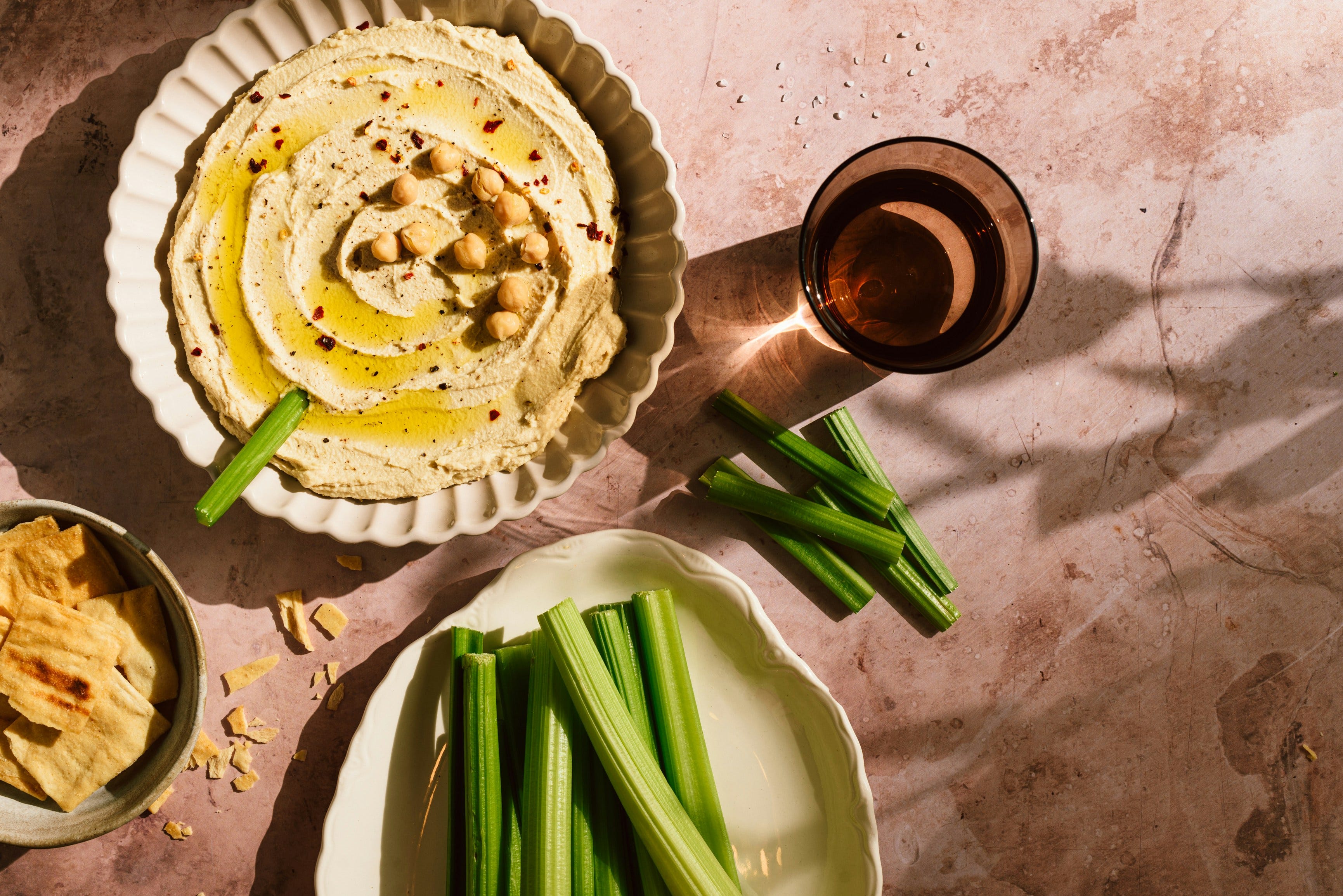
Almond milk and coconut milk daily. Coconut oil on toast. Almond butter on top. Olive oil on nearly everything. Hummus regularly. Pesto often. Nuts as snacks. Each choice, on its own, is intelligent. Each one fits perfectly inside the story of eating well.
And as an Italian, I will admit, I treated olive oil as if it were a protected food group. If a dish existed, it deserved a drizzle. Vegetables, proteins, salads, if it could hold olive oil, it got some. In my mind, it was heart healthy, Mediterranean, practically medicinal. Which, of course, it is. It is also still pure fat.
Together, these choices can form something else.
Not poor nutrition.
A quiet, invisible energy surplus that may slowly accumulate or quietly prevent change.
This is what I now think of as caloric sabotage.
Not emotional eating. Not lack of discipline. Not loss of control. A mathematical problem layered on top of a hormonal and metabolic reality.
These foods share a common profile. They are fat dominant, calorie dense, low in protein, low in fiber, and easy to consume without much chewing. They are spoonable, pourable, and blendable. They produce weak satiety signals. They add calories without adding much fullness.
In fact, very small amounts of these foods often contain the same number of calories as an entire meal, without producing anything close to the same fullness.
And because they are labeled healthy, something subtle happens in the mind.
You assume the portion does not matter. You assume the calories do not matter. You assume the stacking does not matter. You assume the math does not matter. You do not track them. You do not measure them. You do not question them. You trust them.
This is what psychologists call a moral halo.
A moral halo forms when a food is culturally coded as good, clean, disciplined, or superior. Once that halo exists, the food is protected from scrutiny. It is no longer evaluated by physiology or mathematics, but by identity.
You are not just drinking almond milk. You are being disciplined. You are not just eating olive oil. You are being heart healthy. You are not just eating hummus or nuts or pesto. You are performing wellness.
And when a food carries moral approval, precision often disappears.
This matters especially for people who reach a stage of life where results no longer come as easily as they used to.
Not because hormones and age are irrelevant. They are not. They matter enormously.
But because when physiology changes, the margin for error becomes smaller.
Small, chronic surpluses that once had no visible effect can now show up more easily. Small habits that once did not matter can now quietly block progress.
Not only in weight. In skin quality. In inflammation. In glycation and collagen breakdown. In lipid profiles. In energy stability. In how the face holds structure. In how the body recovers.
This is not cosmetic.
It is biological aging.
Many plateaus that get blamed entirely on hormones or age are not caused by one factor alone.
They are often the result of physiology changing and precision lagging behind. The body changes. The eating pattern does not.
What changes now is not what you eat, but how precisely you eat it.
Measuring oils instead of free pouring them. Treating nut milks as tools, not defaults. Pairing fats with protein instead of adding them to low protein meals. Choosing chewing over blending more often. Reformulating sauces instead of eliminating them. Paying attention to stacking.
Not restriction. Accounting.
This is not about blame. It is about finally seeing a blind spot in the wellness narrative.
Most people do not overeat food. They overeat oils, sauces, nut blends, emulsions, and fat delivery systems disguised as health.
And once you learn to see them, you stop blaming only your hormones.
You stop blaming only your age.
You start understanding how biology and behavior quietly interact.